Specialist in Orthodontics
Orthodontic Treatment
Orthodontics, commonly known as braces. Dental conditions that braces can improve include: bite problems, such as overbite (also known as deep bite), open bite, inverted teeth, whistle teeth, crowded or sparse tooth arrangement, and midline misalignment.
In addition to improving the appearance of your teeth, orthodontics can also reduce the chance of developing oral and dental diseases. For example, if the teeth are crowded or unevenly arranged, it will be difficult to clean them thoroughly when brushing or flossing. Food residues will easily remain between the teeth and accumulate dental plaque, which will lead to dental caries and periodontal disease problems. If the teeth are inverted, the lower jaw will protrude more than the upper jaw. In addition to affecting the ability to chew, it will also increase the pressure on the jawbone, joints and teeth. Therefore, if you have the above conditions, it is recommended to receive orthodontic treatment. According to the recommendations of the Hong Kong Orthodontic Society, children can have their first evaluation by an orthodontic specialist before the age of seven, so that potential tooth alignment or bite problems can be identified and treated early.
There are four main types of braces: fixed outer braces, fixed inner braces, removable invisible braces, and functional braces. The treatment time varies from person to person.
Fixed Braces
Fixed braces are common traditional metal braces or ceramic braces. Its technology has matured and is suitable for most teeth that require braces. What exactly are traditional braces and ceramic braces?
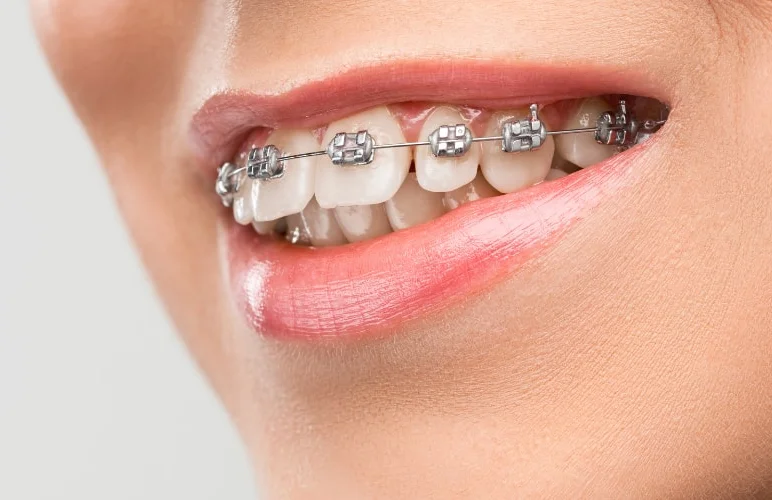
Traditional Metal Braces
Composed of stainless steel brackets and steel wires. A bracket is attached to the tooth surface as an orthodontic appliance, and a metal archwire is attached. When the metal archwire is connected to the braces, the teeth will slowly move to the desired position as the shape of the metal archwire changes and with the force of the braces.
Ceramic Braces
Ceramic braces have the same correction principle as traditional metal braces, but the difference is in the materials:
First, the bracket is made of ceramic, which creates an almost transparent effect visually.
Second, the fiber wires are made of polymer and are smaller than the steel wires used in metal braces.
In addition to different shapes and materials, fixed braces can be divided into "outer braces" and "inner braces". The outer brace means that the braces are fixed on the outside of the teeth, and the braces can be seen as long as the mouth is opened; while the inner brace means that the braces are fixed on the inside of the teeth, making it difficult for others to detect. Regardless of whether they are outer or inner braces, fixed braces cannot be released by themselves, so they are called fixed braces.
The use of fixed braces sometimes requires the assistance of bone nails and elastic bands. Bone nail refers to a temporary implant implanted in the alveolar bone, using the bone nail as a force application point. In special circumstances, such as exposed gums, deep bites, or the teeth need to move backward, the dentist will consider implanting bone nails to provide leverage for the teeth, and then wearing dental elastic bands on the braces to provide tension and accelerate the movement of the teeth.
Removable Braces
Removable braces include invisible braces and functional braces.
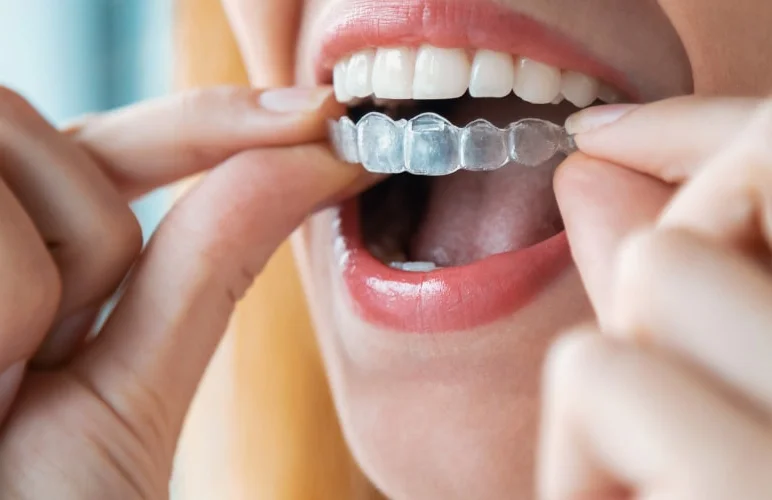
Invisible Braces
Invisible braces are a method of straightening your teeth using invisible braces. Compared with fixed braces, invisible braces have the advantages of being beautiful, convenient, and comfortable due to their transparent appearance and the ability to be removed at any time for eating and brushing. However, the disadvantage is that it is more expensive, and braces can only move teeth sequentially and cannot move all the teeth at once. Therefore, in the early stage of correction, the correction effect is not obvious. In addition, patients can freely remove their braces without the assistance of a dentist. Patients need to rely on their own self-discipline and wear them for at least 22 hours a day to maintain the effect and keep up with the progress of the next set of braces.
Finally, I would like to remind everyone that not all types of dental problems can be corrected through invisible braces. For example, it cannot be used for people with too deep bites or large gaps between teeth.
Functional Braces
Functional braces are only suitable for special circumstances. If a child's bone growth is abnormal, such as mandibular retraction, functional braces can be used to guide the growth of the mandible.
Different dental conditions are suitable for different types of braces. Please consult a registered dentist or orthodontic specialist for details.