Extractions
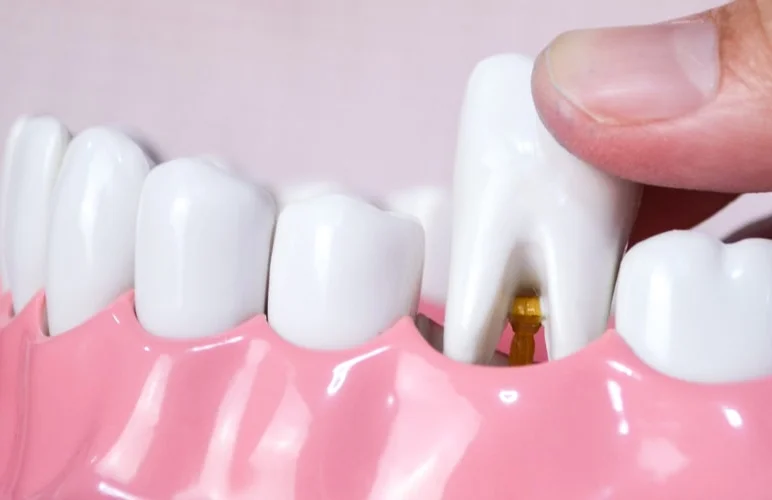
The dentist will use different dental tools to completely remove the tooth from the mouth and remove the entire tooth. There are two types of tooth extraction: ordinary tooth extraction and surgical tooth extraction.
Ordinary Tooth Extraction
For ordinary teeth, the dentist first gives the patient local anesthesia, then uses a dental lift to loosen the tooth, and then uses surgical forceps to extract the tooth.
Surgical Tooth Extraction
If there are very severe tooth decay, wisdom teeth that are not in the ideal growth position, or teeth with severely cracked roots, the teeth will be surgically removed. The dentist first gives the patient local anesthesia, then uses dental tools to open the gums, remove part of the alveolar bone, expose the root of the tooth, and then shake the tooth loose and pull it out. If the root of the tooth is very deep or the tooth has been chipped, the dentist will cut the tooth into several parts, take them out one by one, and then sew up the wound.
Situations that Require Tooth Extraction
· Teeth that are so badly decayed that they cannot be repaired
· Severe periodontal disease
· Severe damage to teeth due to impact
· Cooperate with jaw correction to realign the space for teeth
· Need to install dentures or implants
· Unsatisfactory tooth growth affects oral health
Care after Tooth Extraction
The dentist will use sterile gauze or cotton strips to cover the wound and ask the patient to bite it to stop the bleeding. The bleeding will gradually stop in about 30 minutes to an hour. If there is pain, redness and swelling in the wound after tooth extraction, the patient can apply ice pack on the cheek to relieve the pain. Remember to avoid hot pack and take painkillers to relieve the pain when necessary.
Two to three hours after the surgery is completed, while the anesthesia and pain subside, the patient can start eating. When eating, chew on the side where the tooth has not been extracted. This can not only avoid irritating the wound, but also prevent food residues from remaining on the wound, making subsequent cleaning difficult. Since the wound has not yet healed, you should mainly eat warm, light, and liquid foods, such as cooled porridge, crushed fruits or foods, and avoid hard foods or alcoholic beverages.
The average healing time after a tooth extraction is generally about 7-10 days. The gum tissue gradually heals and the sutures can be removed (or will dissolve on their own). After two weeks, the smaller socket may be completely healed. If the tooth is surgically extracted, it will require a longer recovery period due to the larger wound.
How to clean after tooth extraction?
Cleaning after tooth extraction is based on the premise of "not irritating the wound". Especially when cleaning teeth, many people use excessive force and cause the wound to bleed. We should pay attention to:
· Do not rinse your mouth vigorously within 48 hours after tooth extraction. You can tilt your head with salt water in your mouth to let the water flow through, and then spit it out gently.
· Use cotton swabs dipped in water to clean and remove food residue from the mouth.
· Consider brushing your teeth only 24 hours after surgery. When brushing, you should avoid the wound area and just brush other parts.