Teeth Whitening
Teeth cleaning can only remove stains on the surface of the teeth and cannot change the color of the teeth. To make your teeth whiter, you need to undergo a teeth whitening treatment. Commonly used methods include "blue light teeth bleaching" and "home teeth bleaching", which can increase up to 10 shades.
Blue Light Teeth Whitening
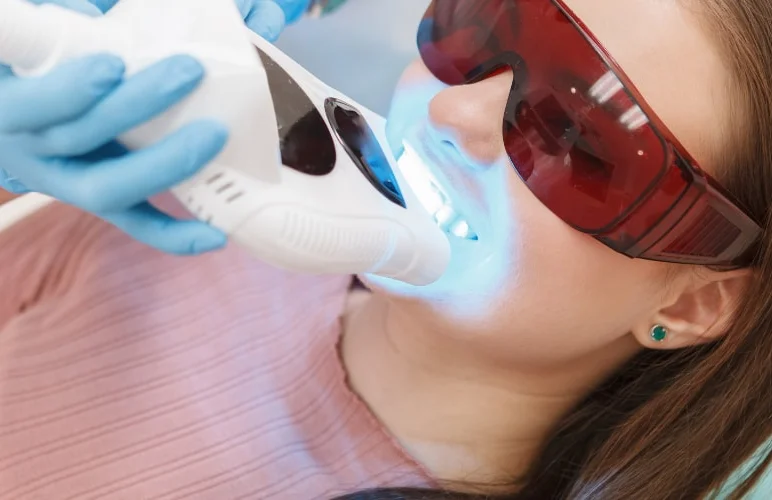
Blue light teeth bleaching must be performed in a dental clinic. The dentist will apply an appropriate amount of whitening agent, such as Hydrogen Peroxide, to the patient's teeth and use blue light/laser to irradiate it, causing it to oxidize and penetrate into the dentin and remove the precipitated pigment. The effect will be visible in a short time. It is a fast, safe and effective method of teeth whitening.
Advantages of Blue Light Teeth Bleaching
· The treatment only takes about an hour
· See results immediately
· Natural and even tooth color
· The effect lasts about one year
· Painless and non-invasive
· No harm to teeth and gums
The Process of Blue Light Teeth Bleaching:
1. Tooth Color Confirmation
After checking the health of the teeth, the dentist will use tooth color cards of different shades to compare the current condition of the patient's teeth, allowing the patient to choose and make comparisons after treatment.
2. Gum Protection
Before teeth bleaching, the doctor will use a mouth opener to fix the patient's mouth and apply protective agent to the gums to prevent blue light and whitening agents from irritating the gums.
3. Apply Whitening Agent
After preparation, the dentist applies the whitening agent evenly to the tooth surface.
4. Blue Light Exposure
Use blue light to irradiate the teeth coated with whitening agent 2 to 3 times. The patient's teeth may feel sore and soft, which is a normal reaction. When the blue light exposure ends, your dentist will rinse off the whitening agent and gum protectant thoroughly.
5. Tooth color comparison
The dentist will take out the previous tooth color card and compare the color before and after the treatment. After confirming that there is no problem, the tooth bleaching will be completed.
Home Teeth Bleaching
Home teeth bleaching does not need to be performed in a dental office. The dentist will first take a dental mold for the patient and make a custom-made gutta-percha with a similar cut. Patients only need to squeeze the whitening agent onto the teether every night, then put it on their teeth and wear it for the specified time or overnight. The concentration of the whitening agent and the usage time of the teether depend on the patient's condition. Generally speaking, results can be seen in one to two weeks.
Advantages of Home Teeth Bleaching
· Time flexibility, you can do it anytime and anywhere at home
· Cheaper price
· Lower concentration of whitening agent reduces the risk of injury to teeth and gums
· Painless and non-invasive
Not Suitable for People Who Have Teeth Bleached
People with tooth decay, periodontal disease, cracked teeth, tooth sensitivity, etc. may not be suitable for tooth bleaching. They need to be judged or treated by a dentist. Teeth bleaching can only be carried out after the teeth return to normal.
No matter which teeth bleaching method is used, you should try to avoid foods or drinks with dark pigments after whitening your teeth, such as curry, milk tea, cola, coffee, etc. Patients should also reduce smoking, brush and floss correctly in the morning and evening to maintain white teeth.